


X-Grip PowerTester™ - Digital Hand Dynamometer - 265 lb / 120 kg
X-Grip PowerTester™ - Digital Hand Dynamometer - 265 lb / 120 kg
Couldn't load pickup availability
- Secure checkout
- 30-day money back
- Satisfaction guaranteed
- Free shipping
Know your grip. Track your progress.
The X-Grip PowerTester is the digital hand dynamometer that checks your grip strength in about ten seconds: grip the handle, squeeze, and read your strength in kilograms or pounds. Save each result and follow your trend over time, then pair testing with the X-Grip Pro™ trainer. Measure → train → retest, in one simple loop.
- ✅ USB-C rechargeable. Charge it over USB-C, or power it with 2× AAA batteries (not included).
- ✅ Accurate digital readout. A strain-gauge load sensor with 0.1 kg display resolution and manufacturer-specified accuracy of about ±1 kg (±2 lb) — for comparable trends, test the same way each time.
- ✅ Built-in strength guide. Every result comes with the device’s own Weak / Normal / Strong label for your age and sex — a non-clinical reference point.
- ✅ Remembers 19 users. Save a profile each for the family, the team, or the people you train — up to 46 tests per person, no app needed.
- ✅ Fits your hand. Turn the chrome knob to set the grip width, and the non-slip handle stays comfortable for small and large hands alike.
- ✅ Switches kg ↔ lb in one tap. Enter age and sex and the device factors them into its built-in reference.
✅ Free Worldwide Shipping · Risk-Free 30-Day Money-Back Guarantee
Why Grip Strength Matters
Handgrip strength is a practical measure of hand and forearm strength. Researchers also use standardized handgrip testing as one marker of muscular function in studies of aging. Grip strength can improve with training, including in older adults, although individual results vary. The PowerTester gives you a fitness metric to record and compare under consistent conditions; a grip score alone does not assess overall health.
The X-Grip PowerTester is for personal fitness tracking only. It is not a medical device, and neither its reading nor its manufacturer-programmed Weak/Normal/Strong category diagnoses, screens for, or predicts any health condition.
How Strong Is Your Grip?
It depends on age, sex, hand, device, population and test method. As one rough reference, the table below reproduces mean right-hand values from Massy-Westropp et al. (2011), an Australian population-based study using a Jamar dynamometer and the mean of three trials:
| Age | Men — right hand | Women — right hand |
| 40–49 | ~47 kg | ~29 kg |
| 50–59 | ~45 kg | ~28 kg |
| 60–69 | ~40 kg | ~24 kg |
| 70+ | ~33 kg | ~20 kg |
These are study means from one Australian sample, not limits, targets, clinical cut-offs or expected PowerTester readings. Results can differ by device and testing protocol. Use the chart only as general context; for personal tracking, compare readings from the same device under the same conditions. The PowerTester’s Weak/Normal/Strong category is a separate, manufacturer-programmed, non-clinical reference.
Specifications
| Measurement range | Up to 120 kg (265 lb) |
| Accuracy | ±1 kg (±2 lb), manufacturer-specified |
| Resolution | 0.1 kg / 0.2 lb |
| Units | Switchable kg / lb |
| Power | USB-C rechargeable or 2× AAA (not included) |
| Memory | 19 user profiles, up to 46 tests each |
| Display | Backlit LCD, dual units |
| Handle | Adjustable grip width; non-slip TPR |
| Material | High-impact ABS with TPR grips |
| Colour | Matte black |
How It Compares
| X-Grip PowerTester | Clinic dynamometer | Spring gripper | |
| Displays measured squeeze force | Yes — digital kg/lb | Yes | No — its resistance setting is not a measured result |
| Tracks progress | 19 users × 46 tests | Varies by model and workflow | No |
| Typical use | Personal fitness tracking | Professional assessment | Grip training |
| Sensor | Strain gauge | Strain gauge / hydraulic | — |
The PowerTester uses a strain-gauge load sensor. Some professional dynamometers also use electronic load cells, but that does not establish clinical equivalence or make their readings interchangeable. The PowerTester is for personal fitness tracking, not clinical or diagnostic use.
Who Is the PowerTester For?
- Anyone keeping their strength up after 45 — track your grip strength over time; training may improve grip strength, although individual results vary.
- Anyone training their grip — pair it with the X-Grip Pro™ or any gripper and track your progress with real numbers instead of guesswork.
- Strength and climbing athletes — benchmark your grip, set targets, and track changes alongside your forearm training.
- Coaches, trainers and fitness groups — test several people and keep each person’s history with the 19-profile memory.
- The whole household — turn grip strength into a friendly family challenge everyone can retest each week.
How to Use
- Charge it over USB-C (cable included), or fit 2× AAA batteries.
- Choose a user profile and set your units to kg or lb.
- Sit with your elbow bent at about 90°, then squeeze the handle as hard as you can for 3–5 seconds.
- Read your score — it comes with the device’s built-in Weak / Normal / Strong reference label.
- To compare against the chart, take three squeezes on the same hand and use the average.
- Retest weekly under the same conditions and follow how your numbers change over time.
What’s in the Box
- X-Grip PowerTester™ digital hand dynamometer
- USB-C charging cable
- Quick-start guide
Frequently Asked Questions
What is a good grip strength score?
It depends on age, sex, hand, device and method. As a rough reference, mean right-hand values from one Australian study (Massy-Westropp et al., 2011) are about 45 kg for men and 28 kg for women in their fifties, easing down in later decades. These are study means — not limits, clinical cut-offs or expected PowerTester readings — so your own number will vary, and it’s the trend over time that matters most. The PowerTester labels each result Weak, Normal or Strong as a non-clinical reference.
How accurate is the PowerTester?
It uses a strain-gauge load sensor with 0.1 kg display resolution and manufacturer-specified accuracy of about ±1 kg (±2 lb). It’s built for tracking your own progress — not for diagnosis or clinical use — so for comparable trends, use the same device, hand, handle setting, posture and method, testing in the same seated position with your elbow bent at roughly 90°.
What setup is needed before first use?
Very little — charge it over USB-C (or fit 2× AAA batteries), choose a user profile, set kg or lb, and squeeze. Before testing, just confirm the display reads zero and follow the quick-start guide.
Can the whole family or team share one device?
Yes — it stores 19 separate user profiles with up to 46 tests each, so everyone keeps their own history on the same unit, no app required.
How should I test for consistent results?
Keep the conditions the same every time. Sit upright with your elbow bent at about 90°, upper arm against your side and wrist straight, and open and close your hand a few times to warm up before a maximal squeeze. Breathe out during the squeeze rather than holding your breath, and test at the same time of day — that’s how single readings turn into a trend you can compare.
How many attempts should I take?
Take three squeezes per hand, resting about a minute between them, and track either your highest result or the three-attempt average — whichever you pick, stick to the same method every session. Scores often differ between hands, so give each hand its own user profile.
How long does shipping take?
Most orders arrive within 1–2 weeks (7–15 business days). Shipping is free worldwide, and you get a tracking link as soon as your order ships.
What’s your returns policy?
We offer a 30-day money-back guarantee — contact us within 30 days of delivery to start a return. Eligibility and refund details are in our Returns & Refunds Policy.


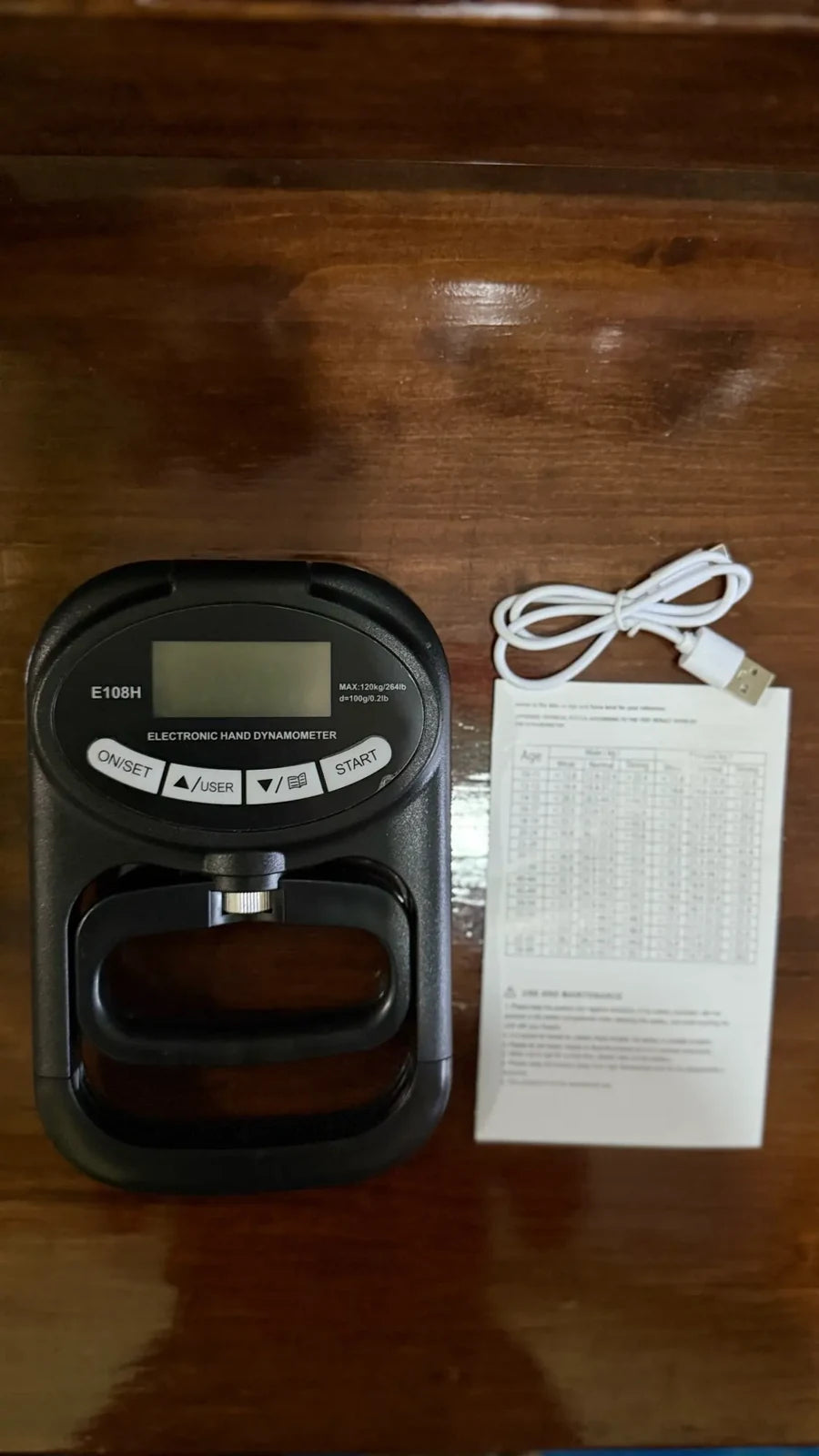

Pretty good item (i aint a bot vro) i dont know how accurate it is but it seems to be working
Received quickly and works very well. Great purchase!
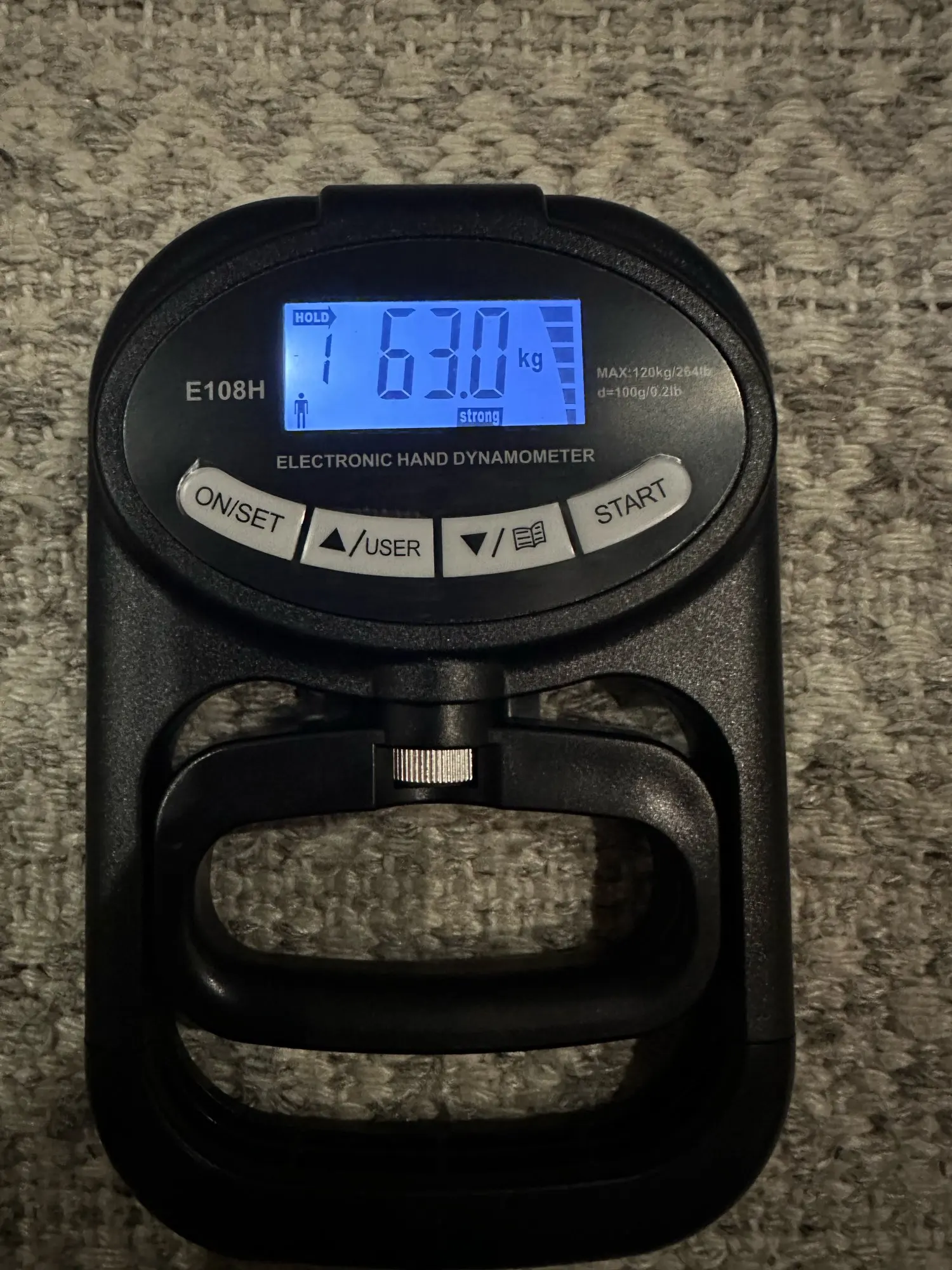
X-Grip PowerTester™ Digital Hand Dynamometer - 265 lb / 120 kg
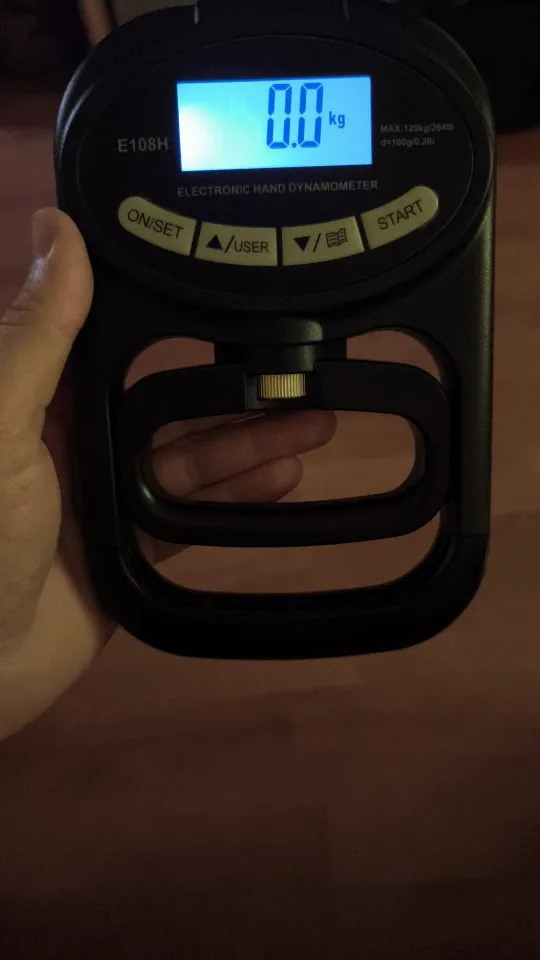
Very good product, it arrived very quickly and the quality is incredible. I recommend it.
Good product, however, the distance between the point of force application of the carpal wrist and the phalanges of the fingers.